SOKENDAI
SOKENDAI
High Quality Research
United under the term “Genetics”, graduate students at NIG continue to expand the frontiers of life sciences in molecular and cell biology, development, neurosciences, evolution, structural biology and bioinformatics. The quality of NIG research is evident from the frequent citations of papers published from the institute and the high funding rates for our grant proposals. NIG houses tremendous resources for basic research in life sciences, such as the well-established DNA database (DDBJ), an extensive collection of natural variants and mutant strains of various model organisms, and state of the art research equipments.
Small Lab Size
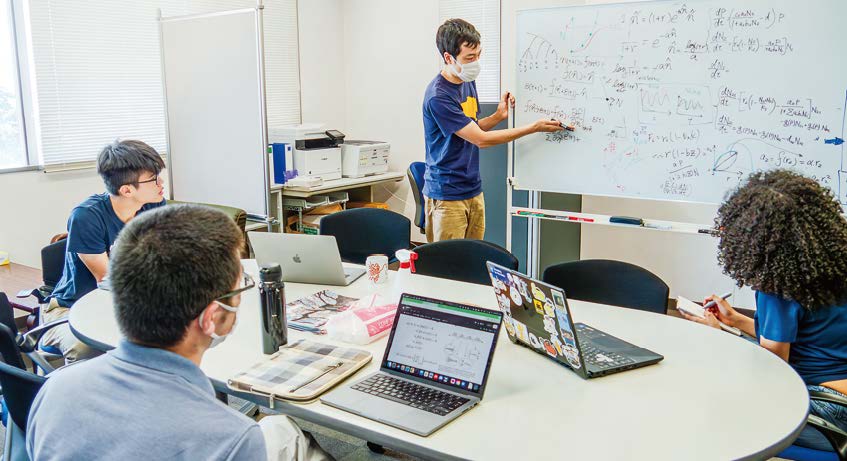
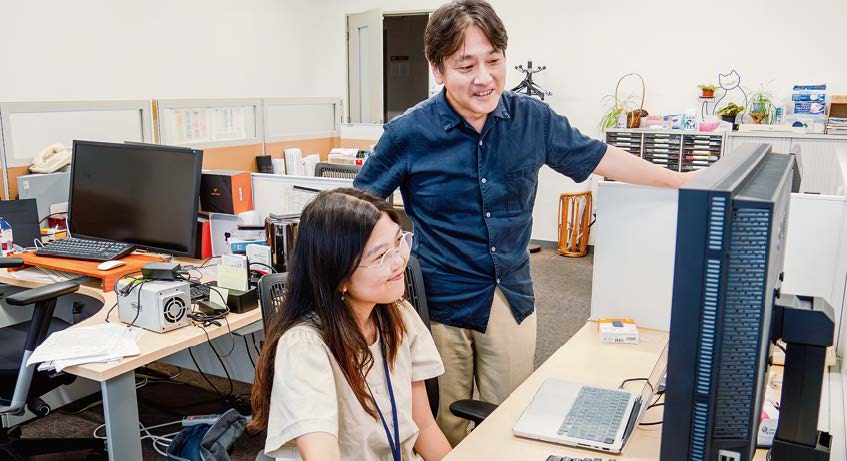
Unlike most other Japanese universities that retain the “pyramid” lab structure, professors and associate professors organize independent research groups at NIG. Each group is small; a typical lab consists of fewer than ten people. Thus, the ratio of faculty to students is extremely high, an average of 1.4 faculty/student. This enables the graduate students to have frequent and in-depth discussions with faculty-something not possible at institutions with an undergraduate program, which must accept several students per faculty every year, not counting undergraduate students!
Diverse Courses and Frequent Seminars
The Genetics Program offers diverse courses aimed at providing in-depth as well as basic knowledge on various fields of life sciences. The courses are designed to foster critical thinking and logical discussion skills. Courses on scientific presentation and scientific writing are also offered. Using a remote lecture system students can take courses in various disciplines provided by other programs of SOKENDAI.
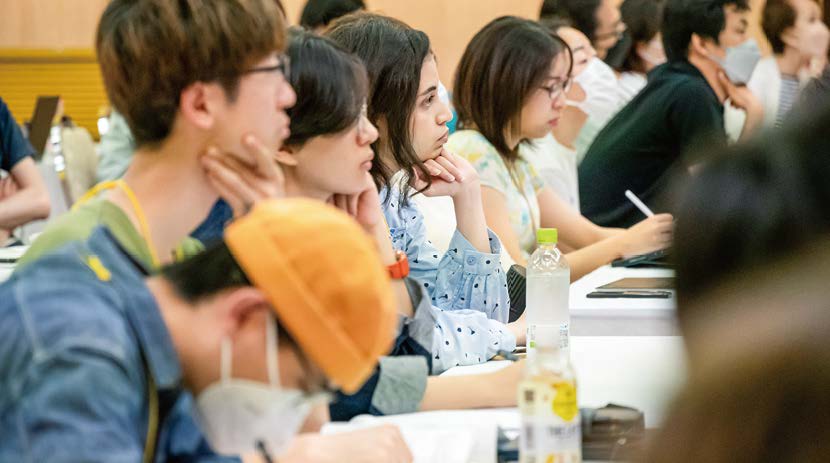
A large number of seminars covering various fields of life sciences are held at NIG, including “Biological Symposia” and “Biological Webinar” featuring eminent scientists from all over the world. In addition, members of NIG present their progress during the past year at weekly “NIG Colloquia.” Almost all the seminars are given in English, and the graduate course lectures are also given in English. Knowledge of Japanese is not required for completing the graduate program and obtaining PhD degree.
Team Teaching
NIG has a policy that “all” faculty members should be involved in the education of each student. In addition to the thesis advisor (PI of the lab in which the student belongs to) students receive guidance and support from the “Progress Committee”, whose members are selected by each student from outside their own research group. This committee meets with the student once per year (or more often if requested by the student) and gives advice on the student’s thesis project. In addition, students have opportunities to present their work every year in poster progress sessions, and have discussions with the committee as well as other faculty and postdoctoral fellows. By providing a friendly and stimulating environment to have in-depth discussions with researchers in other fields, this program helps students to broaden their views and to find breakthroughs when research is not going smoothly. It also gives opportunity to prepare for presenting seminars at conferences.
Close Network of Research Groups
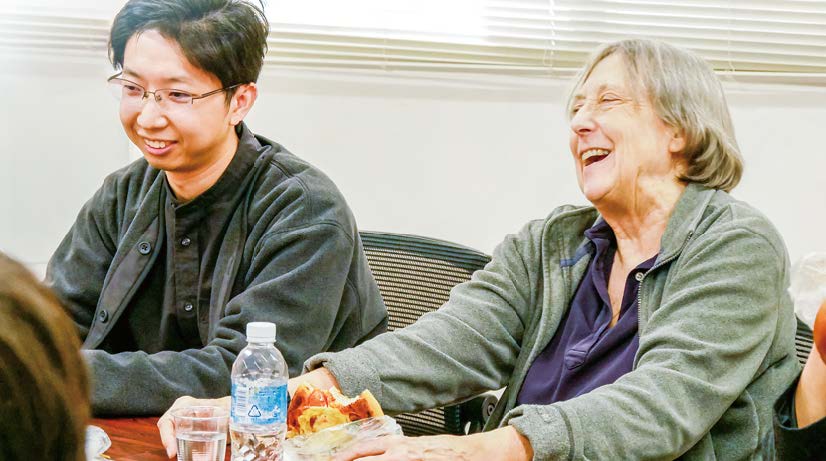
NIG is famous for active interactions and discussions among the in-house researchers. Because each research group is small, many groups have joint lab meetings with other labs, and collaborations between groups are very common. Graduate students also actively and freely visit other research groups to acquire new techniques and knowledge, which is another advantage of small groups. NIG also hosts various types of researchers, such as postdoctoral fellows, collaborative researchers and visiting scientists from abroad. Interacting and networking with researchers with diverse levels and backgrounds is an ideal way for students to develop broad and balanced views as mature scientists.
Life Science Retreat
SOKENDAI houses the largest number of life science faculty in Japan. In addition to the Genetics Program in Mishima, the Okazaki area has two programs, the Physiological Sciences Program and the Basic Biology Program, and the Integrative Evolutionary Sciences Program is located in Hayama. These four life science programs hold a joint retreat every year for scientific interactions.