
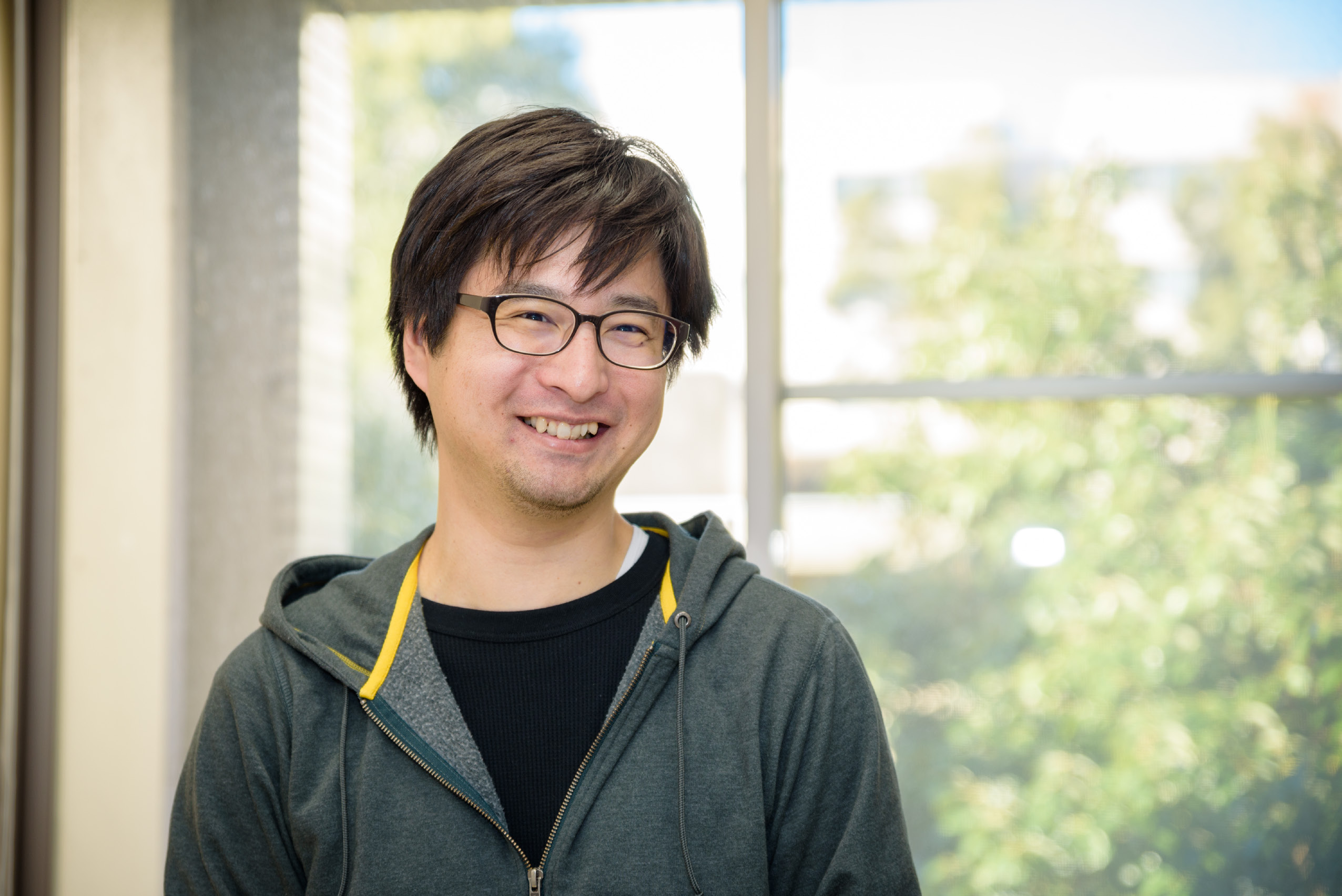
We all started from a single fertilized egg, undergoing many cell divisions to maintain our lives. DNA molecules carrying our genetic information are replicated at each cell division and transferred to our progeny in the form of chromosomes. Protein complexes called “SMC complexes” are considered to play a central role in chromosome organization. Yasuto Murayama, an associate professor at CFR, is focusing on these important proteins and their reconstitution of their activities in vitro. According to Murayama, he “couldn’t make any achievements at all for the first two years working with SMC complexes.” But he has persistently and patiently made repeated rounds of trial and exploration, and eventually leading to a breakthrough.
Profile
Dr. Murayama graduated from the Department of Applied Biological Science, College of Bioresource Sciences, Nihon University and completed his Ph.D. (Science) doctoral course at the International Graduate School of Arts and Sciences, Yokohama City University. He has held various positions including research associate at Tokyo Ins itute of Technology, postdoctoral fellow at Cancer Research UK, postdoctoral fellow at Yokohama City University, before becoming an associate professor at the Center for Frontier Research (CFR), National Institute of Genetics (NIG) in July 2017. He has received many awards including the 2017 GSJ Award for Young Scientists from the Genetics Society of Japan.
Going to England to Reconstitute SMС Complexes
“The DNA constituting each chromosome is quite long; each human cell contains approximately 2 meters of DNA, which needs to be folded in an orderly fashion so that it can fit into a micron-sized nucleus. This folding is undertaken by huge ring-shaped proteins called SMC complexes. Like rubber bands, these protein “rings” entrap and bundle multiple DNA molecules together to fold them into chromosomes. I am interested in the organization of chromosome structures, an essential process in cell division. At this stage, two newly replicated sister chromatids are bundled together by cohesin (i.e. the SMC1/3 complex), after which each of the chromatids are further compacted through a process driven by condensin (i.e. the SMC2/4 complex) to yield the familiar X-shaped chromosome. Then, microtubules attach to the compacted chromosome and pull the sister chromatids to opposite poles. When the tension generated between the sister chromatids becomes balanced, cohesin is destroyed and the sister chromatids start to segregate towards opposite poles of the cell”
Murayama started to work on SMC complexes when he was a postdoctoral fellow. He became the first person to successfully confirm cohesin activity in vitro. “I went to England, and there I purified two proteins, cohesin and cohesin loader, which regulates cohesin activity, from yeast. It took such a long time, but by mixing these two proteins, I ultimately demonstrated that cohesin alone has the ability to pass the DNA through the ring.”
Elucidating the Details of the Mechanism, One by One
Building on this first great achievement, Murayama currently focuses on a particular event during cell division: DNA replication. He is elucidating the processes that takes place behind the scenes, step by step. “What I’ve demonstrated is the fundamental activity of cohesin. I’m still at the start line. Cohesin is considered to serve as a tie for bundling DNA molecules together, but how does it bind to two or more DNA molecules? Various models have been proposed to answer this fundamental question, but the mechanism is still unknown. DNA replication and cohesion establishment are considered to proceed in a coordinated manner, so I may need to reconstitute DNA replication concurrently with the attachment of replicated sister chromatids. This would be quite an ambitious project, but if I succeed, I should be able to elucidate the mechanism of chromatid cohesion establishment.”
Because there are so many things we do not understand, it is important to focus on these proteins one by one and actually verify their roles. “It’s really exciting when the proteins actually exhibit their designed activities. It’s like building something with Lego blocks. When I complete one protein, I move on to the next associated protein. One by one, I collect components to build a larger system. The ultimate goal is to reconstitute the entire cell.”
Towards Ultimately Understanding the Entire Dynamics of Chromosome Organization
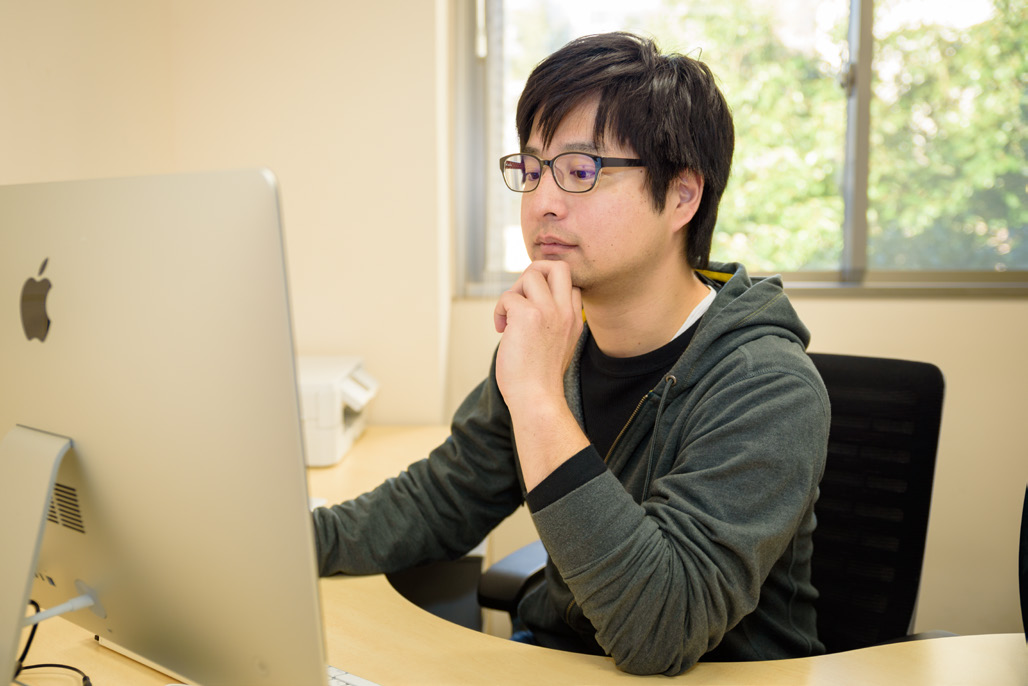
Several types of SMC complexes have been identified; in addition to cohesin, Murayama is also interested in the “third” SMC complex known as the SMC5/6 complex. “Same as cohesin and condensin, the SMC5/6 complex is an essential protein, it contributes in a broad-range of chromosome functions including chromosome segregation, DNA repair and transcriptional regulation. However, its function as chromosomal architect is ambiguous, thus this is the most enigmatic SMC complex. It would be my next challenge.”
Historically, the SMC5/6 complex has been studied as a mutant of “homologous recombination”, a conserved error-free DNA repair pathway. “I used to be interested in homologous recombination when I was a student. The SMC5/6 complex also attracts me in those terms. In the medical context, the SMC5/6 complex is known for its deep involvement in viral hepatitis. Thus, in addition to improving our academic knowledges, understanding the SMC5/6 functions should have long-term repercussions for human health.”
A Message to Those Interested in Pursuing Research Careers
Murayama views his own research approach as a “classical and textbook approach.” “My research is mainly based on in vitro reconstitution. This approach is very effective for understanding molecular mechanisms, but is not really common. Only a few people are seriously engaged in it. This is because each protein is “unique” and finding the optimum conditions to induce its activity requires dull and laborious work. Not spectacular at all,” laughs Murayama. “I advise the students, don’t get carried away with the trend, go deep into what interests you. No one else may be interested now, but they may be later.”
When he started his career at CFR in July 2017, he was impressed by the strong support he received for launching his research. “NIG offers well-equipped facilities with a lot of equipment and devices available for shared use.” Murayama also says that “researchers working on the same subject using different approaches give me much inspiration and motivation. I would like you to spend the best days of your lives in the best environment.”
Interviewer: Rue Ikeya, Research Organization of Information and Systems
Photographer: Mitsuhiko Kurusu, Office for Research Development
December 2017